What is Effective Work?
Effective Work (EW for short) is Stimuli’s way of putting a number on hypertrophic training: a single measure of how much growth-driving stimulus you banked in a session. Not how much weight left the floor, but how much of that work actually counts toward building muscle.
Two workouts can move the exact same total weight and earn very different Effective Work. What separates them is simple: how hard the sets were, how far you took them, and which muscles actually did the lifting. EW folds all of that into a single number you can follow, across every set, muscle, session and week.
Reading your score
There’s no universal “good” score to hit. The number is in Stimuli’s own units, not kilos or reps, and it only ever means something compared with your own history: today against your own normal, this week against your last few.
That’s also how progress shows up. When the same sessions keep earning solid Effective Work while the weights creep up, your training is genuinely moving forward.
What Stimuli weighs
A few things separate productive training from busywork. Effective Work pays attention to each of them:
Why reps close to failure matter most
This is the part most people get wrong. A set you end with plenty left in the tank leaves most of its potential unused; the very same weight, taken close to your limit, banks dramatically more Effective Work. Stop a set nowhere near hard enough and it can register nothing at all.
It’s also why honest effort logging matters so much, and why “more reps” is not the same thing as “more growth.” Quality of effort beats raw quantity.
Logging effort: RIR, in half-steps
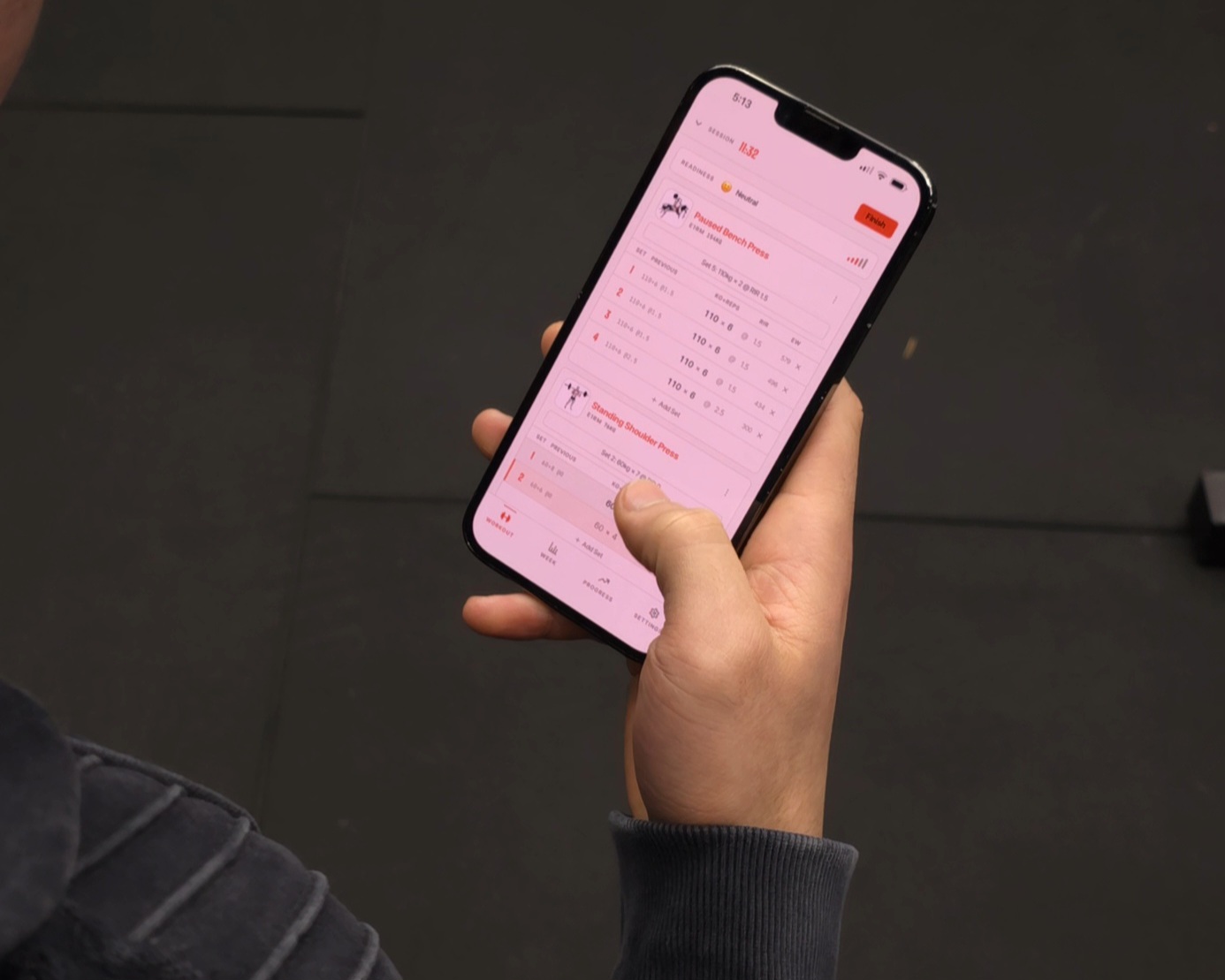
After each set you tell Stimuli how close you took it to failure using RIR, short for “reps in reserve”: simply how many more reps you could have done before failing. RIR 2 means you had about two left in the tank, and RIR 0 means you could not have managed another. You log it in half-steps, so “about a rep and a half left” is a perfectly valid answer.
If you have used RPE before, it is the same idea from the other direction. RPE, or “rate of perceived exertion,” scores a set from 1 to 10, where 10 is all-out with nothing left in the tank. The two are mirror images: RPE = 10 - RIR, so an RIR of 2 is the same as an RPE of 8. Use whichever feels natural; Stimuli understands both.
That little bit of honesty about your effort is what lets Stimuli judge how hard you really trained, and it is the single biggest thing you can do to keep your numbers meaningful.
Reading the muscle map
Effective Work isn’t one lump sum. It’s spread across your body, muscle by muscle, and on the body map each muscle is shaded from faint to bright: the brighter the orange, the more real work that muscle did that day or week. A muscle with no shading at all simply hasn’t logged meaningful work in that window: untouched, not broken.
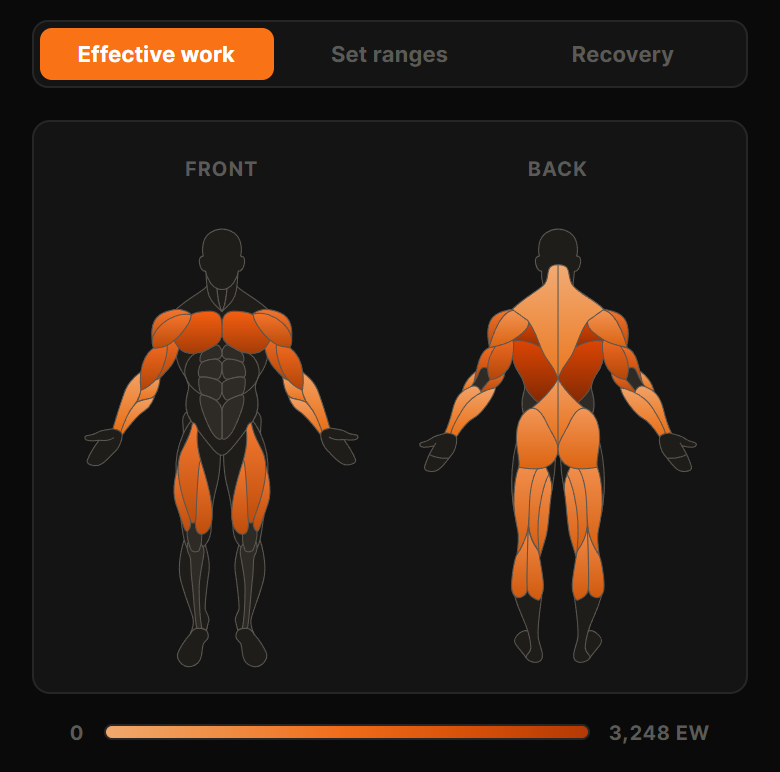
The map makes it obvious at a glance: bright areas are getting hammered, faint areas are coasting. It’s the fastest way to catch a muscle you’ve quietly been neglecting.
Effective Work vs. total weight lifted
Plenty of apps just add up everything you lift: sets times reps times weight. The trouble is that this total rewards junk: long easy sets, half-reps and bouncy partials all push the number up without doing much for your physique.
Effective Work rewards the opposite: hard, full-range reps taken near failure on the muscles actually doing the job. That’s why it’s the number worth watching.
When the number dips
A lower week is not always a warning. Fewer sessions, sets stopped further from failure or a deliberately easy week all pull the number down, and a planned dip is fine. Your weekly total also starts from zero each new week, so a fresh week always opens low.
What deserves attention is an unplanned slide that lasts a few weeks: that usually means effort, attendance or recovery has quietly changed.
How to use it
Don’t chase a bigger number for its own sake. Chase the right balance. Effective Work climbing on a muscle you’re trying to grow means your plan is working. A lopsided spread is your cue to rebalance.
And treat it as a guide, not a verdict. Effective Work measures the training stimulus you created, not how good the session felt or how sore you’ll be tomorrow. Read it alongside how recovered you are, and alongside each muscle’s training volume, before deciding how hard to push next time.
Train with intent
Stimuli gives every muscle an Effective Work score as you log sets, and shows you where it landed.