Is there a muscle-building rep range?
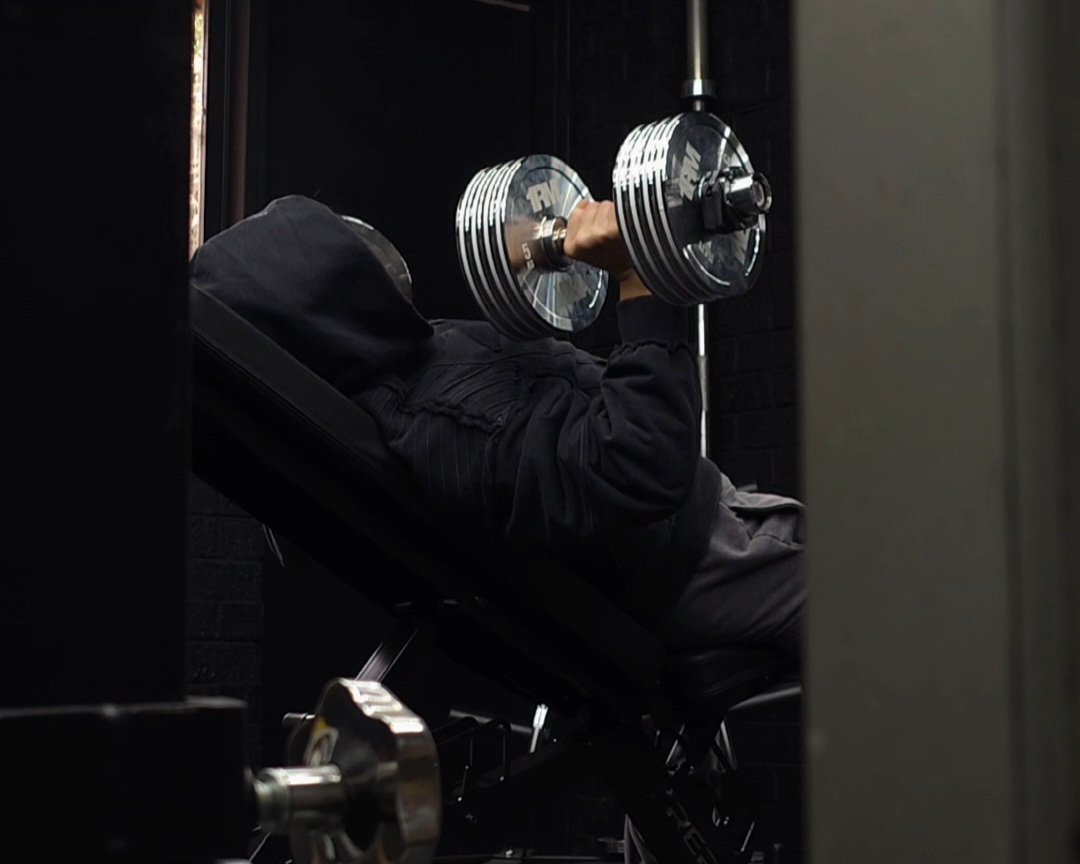
“Eight to twelve reps for size” is on the wall of most gyms. It is not wrong. But the research no longer supports the idea that there is anything special about it.
What the research shows
Two large reviews have pooled the trials that compare heavier and lighter weights with every set taken to failure. Both found the same thing: muscle growth was similar whatever the load. Strength was not. For a bigger one-rep max, heavier training won.
The best-known single trial put forty-nine experienced lifters on twelve weeks of whole-body training, using either light weights for twenty to twenty-five reps or heavier weights for eight to twelve, every set to failure. Both groups gained the same amount of muscle.
There is a floor, though. In a trial that compared loads from one fifth of a lifter’s max up to four fifths, with the total work matched, the lightest load produced less than half the growth of the others, which were all about the same.
- One fifth of max+8.9%
- Two fifths of max+20.5%
- Three fifths of max+20.4%
- Four fifths of max+19.5%
Lasevicius et al. (2018)
And light sets only work when they are pushed. In new lifters, light sets stopped at about half the possible reps produced almost no growth, while heavy sets stopped equally early grew as well as sets to failure.
So why not train light?
Because equal growth is not equal cost. When trained men took light and moderate sets to failure in the same exercises, they rated the light session as harder, more uncomfortable and less pleasant. A set of twenty-five takes longer, too.
Light sets are also harder to judge. People are worse at estimating their reps in reserve on long sets than on short ones, so a long, light set is the easiest kind to stop too early.
Very heavy sets have the opposite problem. A set of two or three holds so few reps that it takes many sets to do the same job, and each one asks a lot of your joints and your recovery.
What Stimuli does with it
Sources
- Schoenfeld BJ et al. (2017). Strength and hypertrophy adaptations between low- vs. high-load resistance training: a systematic review and meta-analysis. Journal of Strength and Conditioning Research.
- Lopez P et al. (2021). Resistance training load effects on muscle hypertrophy and strength gain: systematic review and network meta-analysis. Medicine and Science in Sports and Exercise.
- Morton RW et al. (2016). Neither load nor systemic hormones determine resistance training-mediated hypertrophy or strength gains in resistance-trained young men. Journal of Applied Physiology.
- Lasevicius T et al. (2018). Effects of different intensities of resistance training with equated volume load on muscle strength and hypertrophy. European Journal of Sport Science.
- Lasevicius T et al. (2022). Muscle failure promotes greater muscle hypertrophy in low-load but not in high-load resistance training. Journal of Strength and Conditioning Research.
- Ribeiro AS et al. (2019). Acute effects of different training loads on affective responses in resistance-trained men. International Journal of Sports Medicine.
- Halperin I et al. (2022). Accuracy in predicting repetitions to task failure in resistance exercise: a scoping review and exploratory meta-analysis. Sports Medicine.
Keep reading
- 06How long to rest between setsWhy longer rests build more than short ones
- 08When to add weightLoad or reps, and how your next set is chosen
- →All guides16 short guides to training for muscle
Train with science
Stimuli gives every muscle an Effective Work score as you log sets, and shows you where it landed.