More weight or more reps?
Progressive overload is the one rule nobody argues with: to keep growing, training has to keep getting harder. The argument is about how. Do you add weight to the bar, or reps at the same weight?
What the research shows
It has been tested head to head. In an eight-week trial, forty-three trained lifters started in the same rep range. One group added weight whenever they could and kept their reps where they were. The other kept the weight where it was and added reps. Leg muscle growth was similar, with one thigh muscle growing slightly more in the reps group. Strength gains slightly favoured the weight group, by a margin the authors doubted was meaningful.
A second trial ran the comparison inside the same people. New lifters trained one leg by adding weight and the other by adding reps for ten weeks. Both legs gained the same size and the same strength.
- Added weight+10%
- Added reps+11%
- Added weight+31%
- Added reps+29%
Chaves et al. (2024), worked out from the reported group averages
So the muscle does not much care which number goes up. What it responds to is sets that stay hard as you get stronger, and either route does that.
Progress is a result, not a setting
The part that is easy to get backwards: adding weight does not cause the growth. You can add weight because you grew stronger. A plan that adds load on a schedule, whether or not the reps were there, soon turns hard sets into grinding ones and full reps into short ones.
What Stimuli does with it
Sources
- Plotkin D et al. (2022). Progressive overload without progressing load? The effects of load or repetition progression on muscular adaptations. PeerJ.
- Chaves TS et al. (2024). Effects of resistance training overload progression protocols on strength and muscle mass. International Journal of Sports Medicine.
Keep reading
- 06How long to rest between setsWhy longer rests build more than short ones
- 07Heavy weights or light weights?What the rep count changes, and what it does not
- →All guides16 short guides to training for muscle
Train with science
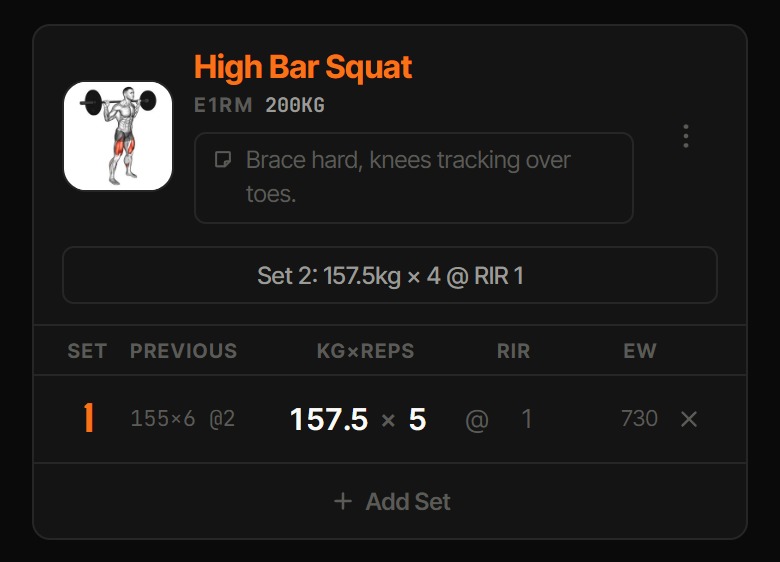
Stimuli gives every muscle an Effective Work score as you log sets, and shows you where it landed.