Do you have to fail to grow?
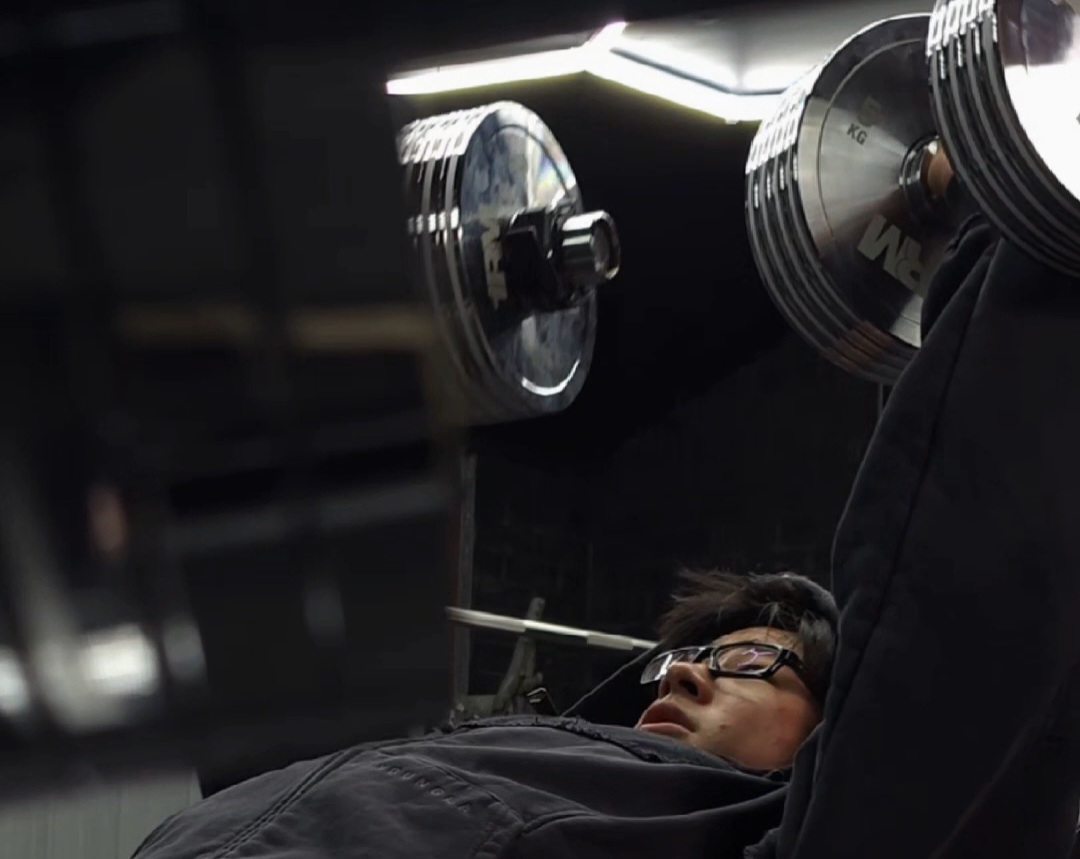
“Take every set to failure” is some of the oldest advice in the gym. “Never train to failure” is some of the newest. The research backs neither. What it shows is a slope: the closer a set ends to failure, the more it tends to grow the muscle, and the final step to failure itself adds the least and costs the most.
What the research shows
A 2024 analysis gathered the trials that reported how far from failure their sets were stopped and set that distance against the results. Muscle growth rose as sets ended closer to failure. Strength did not follow: it improved about as well across a wide range of reps in reserve. The authors call the analysis exploratory, but the direction is clear.
Closer is not the same as all the way, though. When trials compare sets taken to failure with sets stopped short of it, the advantage of failing is small. A 2023 review of fifteen such studies rated it trivial, and it disappeared altogether when failure was defined strictly, as being unable to complete another rep.
The cleanest single test had eighteen experienced lifters train their two legs differently for eight weeks. One leg went to failure on every set of leg press and leg extension. The other stopped with a rep or two still in reserve. Both thighs grew by the same amount.
- Every set to failure+1.8 mm
- A rep or two left in reserve+1.8 mm
Refalo et al. (2024)
Lighter sets need it more
How much reserve you can afford depends on the weight. With a heavy load every rep is demanding from the first, so stopping early gives up little. With a light load the early reps are easy and only the last few ask much of the muscle. One trial in new lifters stopped sets at about half the reps that were possible. With heavy weights the muscle grew as well as it did with sets to failure. With light weights it barely grew at all.
- To failure+8.1%
- Stopped at half the reps+7.7%
- To failure+7.8%
- Stopped at half the reps+2.8%
Lasevicius et al. (2022)
What failure costs
Failure is not free. When researchers kept the total work the same and changed only whether the sets reached failure, the lifters who failed were still below their normal strength and bar speed a day or two later, while those who stopped short had recovered sooner. That is recovery you cannot spend on your next session for the same muscle.
It is also where technique tends to slip, which matters most on heavy lifts such as squats and deadlifts.
What Stimuli does with it
Sources
- Robinson ZP et al. (2024). Exploring the dose-response relationship between estimated resistance training proximity to failure, strength gain, and muscle hypertrophy: a series of meta-regressions. Sports Medicine.
- Refalo MC et al. (2023). Influence of resistance training proximity-to-failure on skeletal muscle hypertrophy: a systematic review with meta-analysis. Sports Medicine.
- Refalo MC et al. (2024). Similar muscle hypertrophy following eight weeks of resistance training to momentary muscular failure or with repetitions-in-reserve in resistance-trained individuals. Journal of Sports Sciences.
- Lasevicius T et al. (2022). Muscle failure promotes greater muscle hypertrophy in low-load but not in high-load resistance training. Journal of Strength and Conditioning Research.
- Morán-Navarro R et al. (2017). Time course of recovery following resistance training leading or not to failure. European Journal of Applied Physiology.
Keep reading
- 05How accurate is your RIR?Where the guess goes wrong, and how to check it
- →All guides16 short guides to training for muscle
Train with science
Stimuli gives every muscle an Effective Work score as you log sets, and shows you where it landed.